
Financing Foreclosures
Trustee Auction
When there is a winning bidder, the payment must be made on the date of sale. Most will pay in cash in the form of cashier’s checks, wire transfer, or in some instances working with a hard money lender that has already been preapproved for a specific property. Conventional methods of financing are not accepted.
The trustee auction is the last step of the foreclosure process. The sale normally takes place at the County Courthouse in the County having jurisdiction. Any junior lienholders are stripped. If a second or third loan does not secure their position by not agreeing to pay off any liens that are recorded in front of them, the liens are dropped and no longer a responsibility to pay off the loan(s). If a junior lienholder protects their position, the amount of the minimum bid will increase by the lienholders who have secured their position with the trustee handling the sale.
Negotiating directly with a seller on a non-listed property
When negotiating directly with a seller in foreclosure, financial institutions are generally open to nearly all financing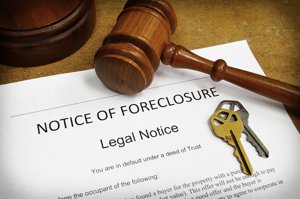 methods including rehab loans. Outside of a cash sale or hard money loan, if the lender appraisal is not conditional to any repairs, it should close like a normal sale. But keep in mind most foreclosure properties tend to have some degree of deferred maintenance.
While in foreclosure, initial contract decisions remain with the seller, not the financial institution. Because foreclosures are a matter of public record, savvy investors will research foreclosure lists, practice due diligence, and find an opportunity to negotiate directly with the seller. Experienced investors understand buying a foreclosure may include the following:
• title searches
• preparing and negotiating with the correct purchase contract forms
• inspections
• address any unpaid bills that may run with the property
• negotiating with the lienholder (usually a financial institution) especially if the seller does not have enough money to cover the sale (short sale)
• the seller is selling under duress and therefore are exempt from many of the rules typically covered by a regular home sale
• Dealing with work orders called by the appraisal
• Moving in/moving out accommodations
Foreclosed Properties
Traditional financing methods are accepted provided the condition of the home meets the criteria for a specific loan. Conventional methods of financing are generally available especially with 20% or more in down payment. Government  backed loans (FHA and VA) along with zero down payment loans are generally not offered as loan options since they tend to be restrictive with the condition of the home. Since most foreclosed homes have deferred maintenance, the seller nearly always offers the home in “as is” condition, and no work orders can be completed prior to close. There are occasional escrow holdbacks allowing for some work orders but are severely limited in total hold back amount, usually up to $5000. Bids must be secured for work orders called by the appraiser and must be approved by the lender.
These foreclosed properties had no successful bidders at the public auction and revert to the financial institution. They are considered REO’s (real estate owned), bank owned, or foreclosures and a local real estate agent is hired to handle the sale of the property. These are the properties you will see on my site.
It is probably the safest way to buy a foreclosed property. A real estate agent must be used to handle the sale of the property. A competent agent with a wealth of experience is preferred and will make the process smoother, can provide tremendous guidance, and is the easiest path to successfully purchase a value property especially for the inexperienced investor. Because they are listed properties, nearly all foreclosed properties can be viewed prior to submitting an offer. Offers can be conditional including a home inspection.
Auctions Through Real Estate Broker
Another infrequent method used by financial institutions is an auction on a foreclosed property through a real estate broker. Normally, there is a time frame to submit offers. The lender reserves the right to not accept any of the bids. A 5% premium based on the sales price is typically added to the sales price and traditional lender financing may be available. They are typically “as is” sales. If there are no successful bidders, the sale is treated like a listed property and price reductions may happen.
Quick Property Search
Useful Information Buyers and Sellers
Search for Homes South King County
Search for Homes Pierce County
:format(webp):quality(80)/u.realgeeks.media/rgtemplate/Market-Report-2.png)